

The Last Camel Man
Adventure in front of the camera, a declared non-smoker – and on his wrist a Cartier Pasha, a gift from his wife.
A conversation that took a turn
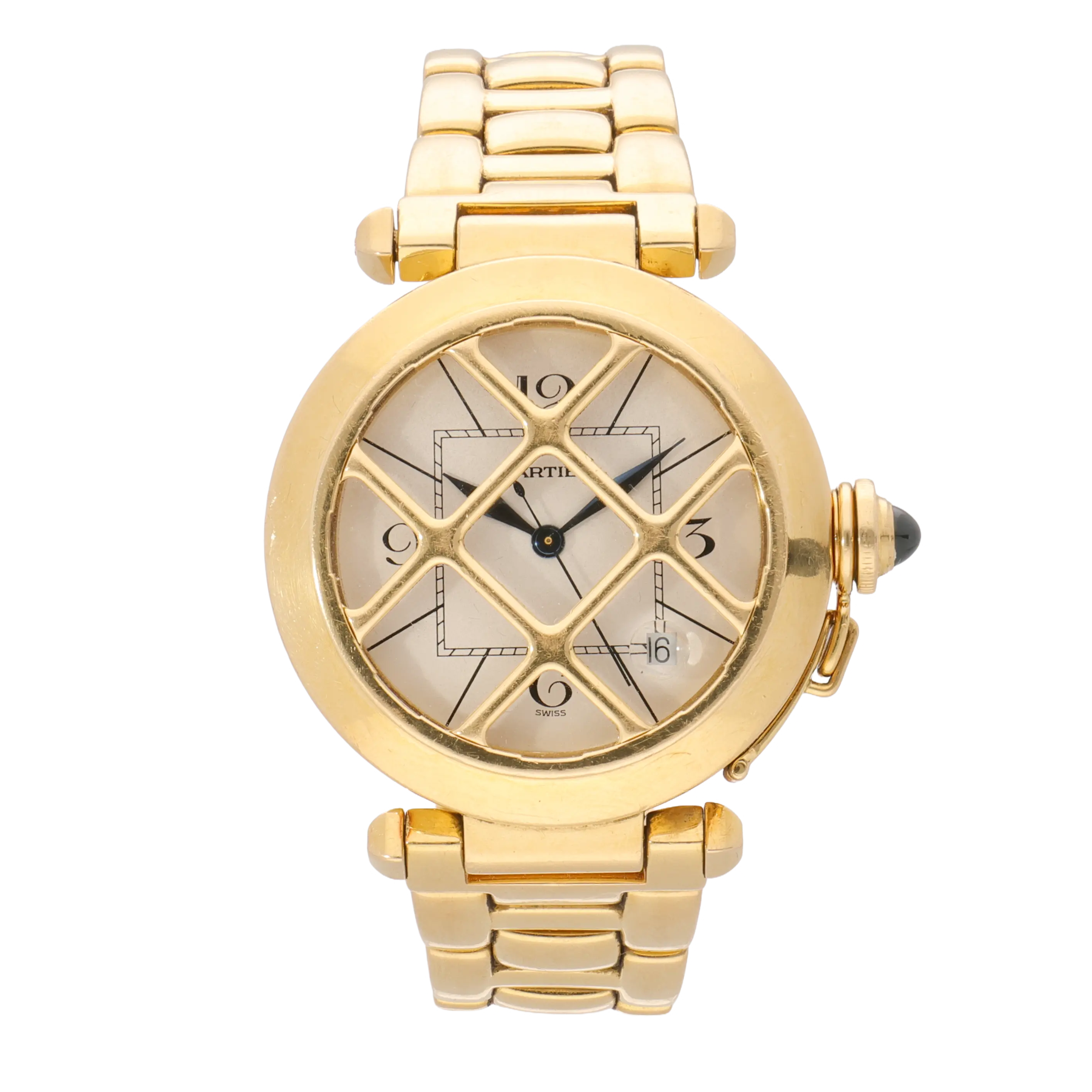
Mr and Mrs Herriger came to our valuation day in Bern with a Cartier Pasha. Across from me sat a man with an alert gaze and an upright bearing – someone who still carries a life spent outdoors. The golden case, the striking grille, the marks of wear – I remarked that the watch looked as if it had seen a thing or two. For a moment there was silence.
Then it became a lively conversation. At some point his wife let me know: the man beside her was the Camel Man. I knew the Marlboro Man. I had not expected to meet the Camel Man at our table. I mentioned that I am a non-smoker myself. So is he, he said.
Martin Ohmann RappOne in 7,000
Georg Herriger paid for his engineering degree at ETH Zurich by working as a model. Under his professional name “Greg” he soon became a familiar face in film and photography, especially in sport.
When Camel went looking for a new face worldwide, he was one of 7,000 applicants – all of them established models. The selection took a long time. In the end, Greg from little Switzerland won. A declared non-smoker.
The non-smoker had become the Camel Man. The shoots were no stroll in the park. In the then still untouched jungle of Venezuela, he fought the dangerous current of the Río Churún in an inflatable boat – they were very nearly swept away, his wife told us.
“The last Camel Man”
How big this role was is shown in a documentary by Swiss Television. In “Eine letzte Zigarette” (One Last Cigarette), Fritz Muri tells of the faces of cigarette advertising: the Marlboro Man, the Parisienne man – and the Camel Man, who sought adventure in the jungle.
The film calls Georg O. Herriger from Bern the last Camel Man. According to the film, he survived breakneck jeep rides, venomous snakes – and the blue haze, too. Off set, he was a non-smoker. In the film he leafs through the old Camel advertisements with a smile. For him, he says, a dream came true: a dream “of adventure, of being outdoors”.
“Back then, there was a completely different awareness.”Georg O. Herriger in “DOK”, SRF, 2 April 2009 (translated)
Then. Now.
A wall full of traces
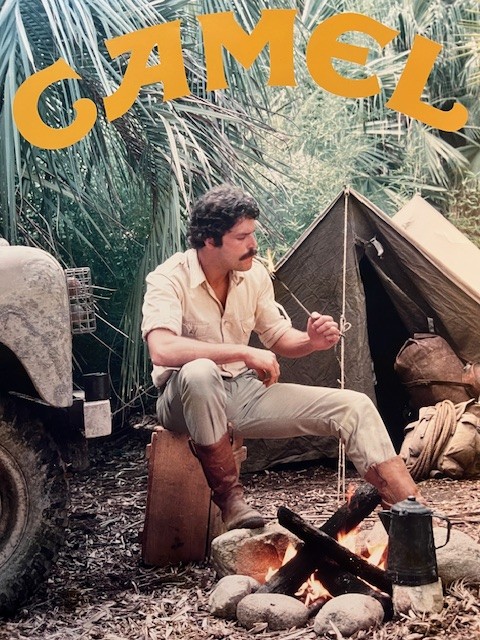
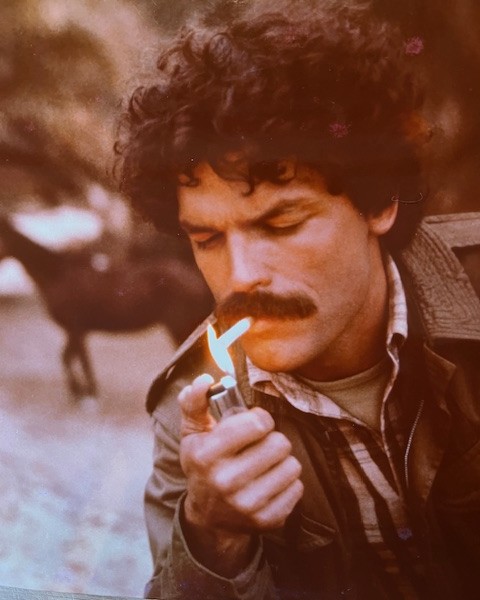
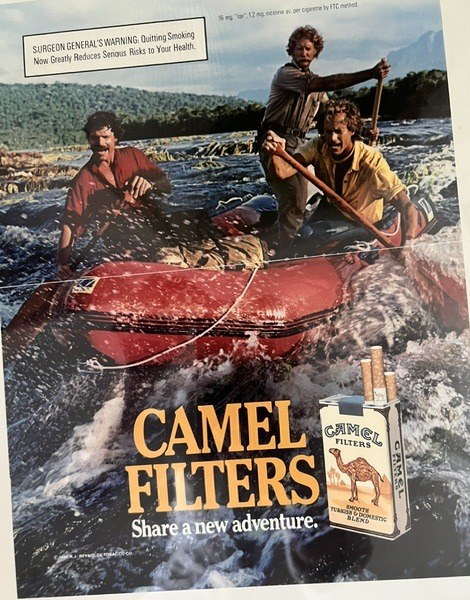
“The Bernese George Herriger roamed the jungle as the ‘Camel Man’ …”
From the press release for “Eine letzte Zigarette” (translated)
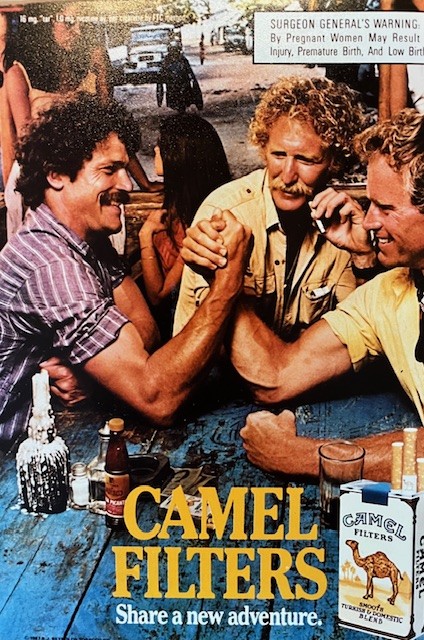
Venezuela, Río Churún. The Pasha had to stay at home.
Shooting for Camel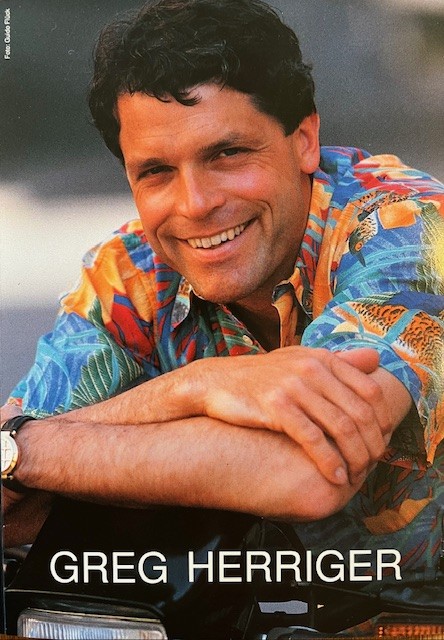
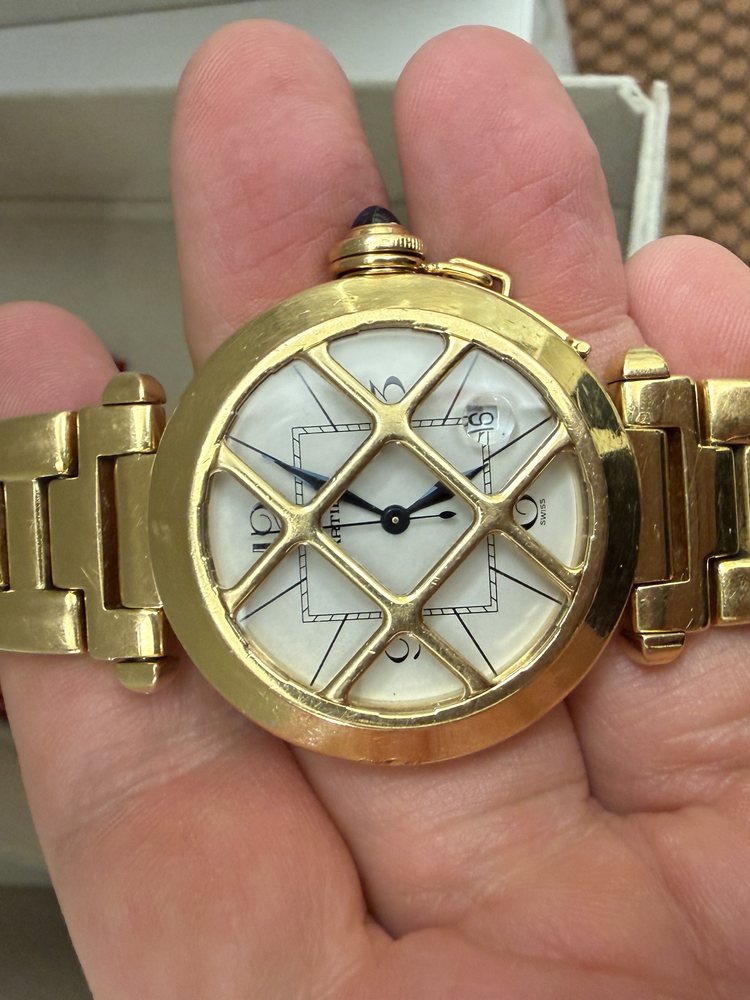
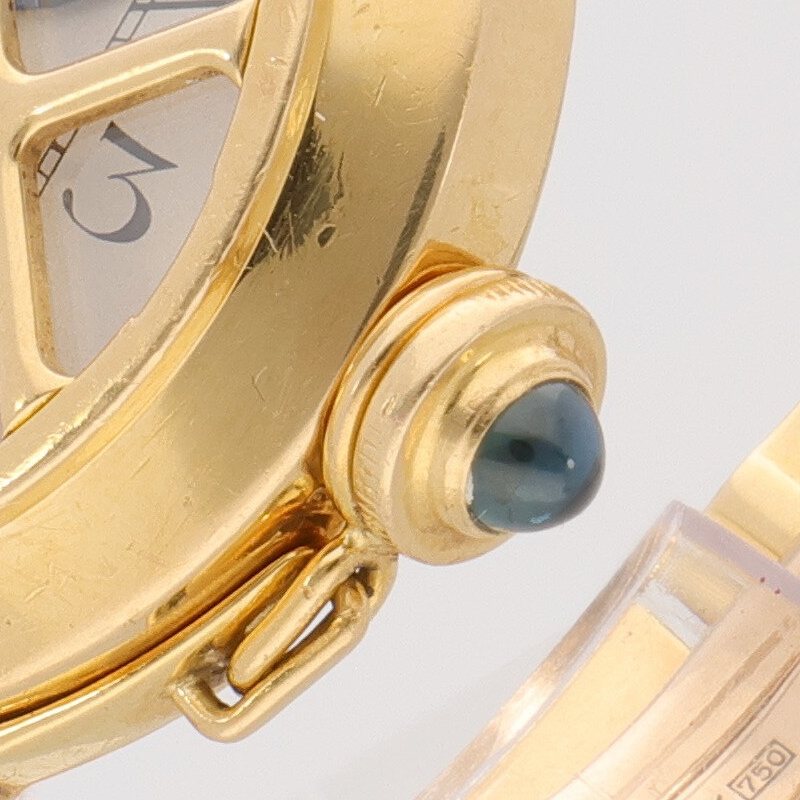
Ready for the next adventure.
Lot 3126 · 26.11.2026Hover over a picture: it straightens up.
A gift from his wife
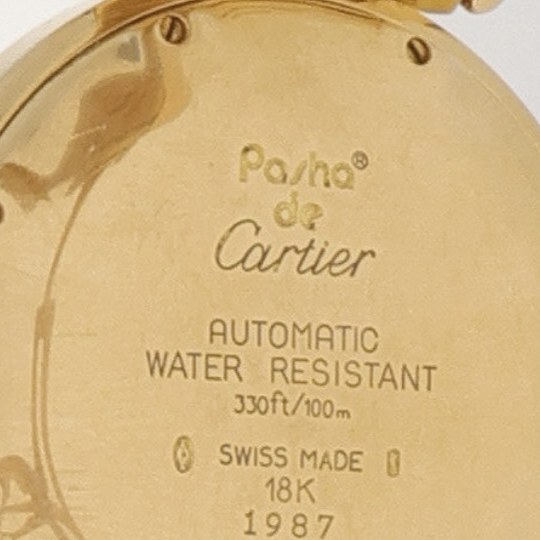
The Pasha was a gift from his wife – once he had landed the role of the Camel Man, as she told us. It was not allowed into the jungle. But after the Camel years, moustache shaved off, he wore his gold watch for many further bookings in front of the camera – and it always drew admiration. In private, too.
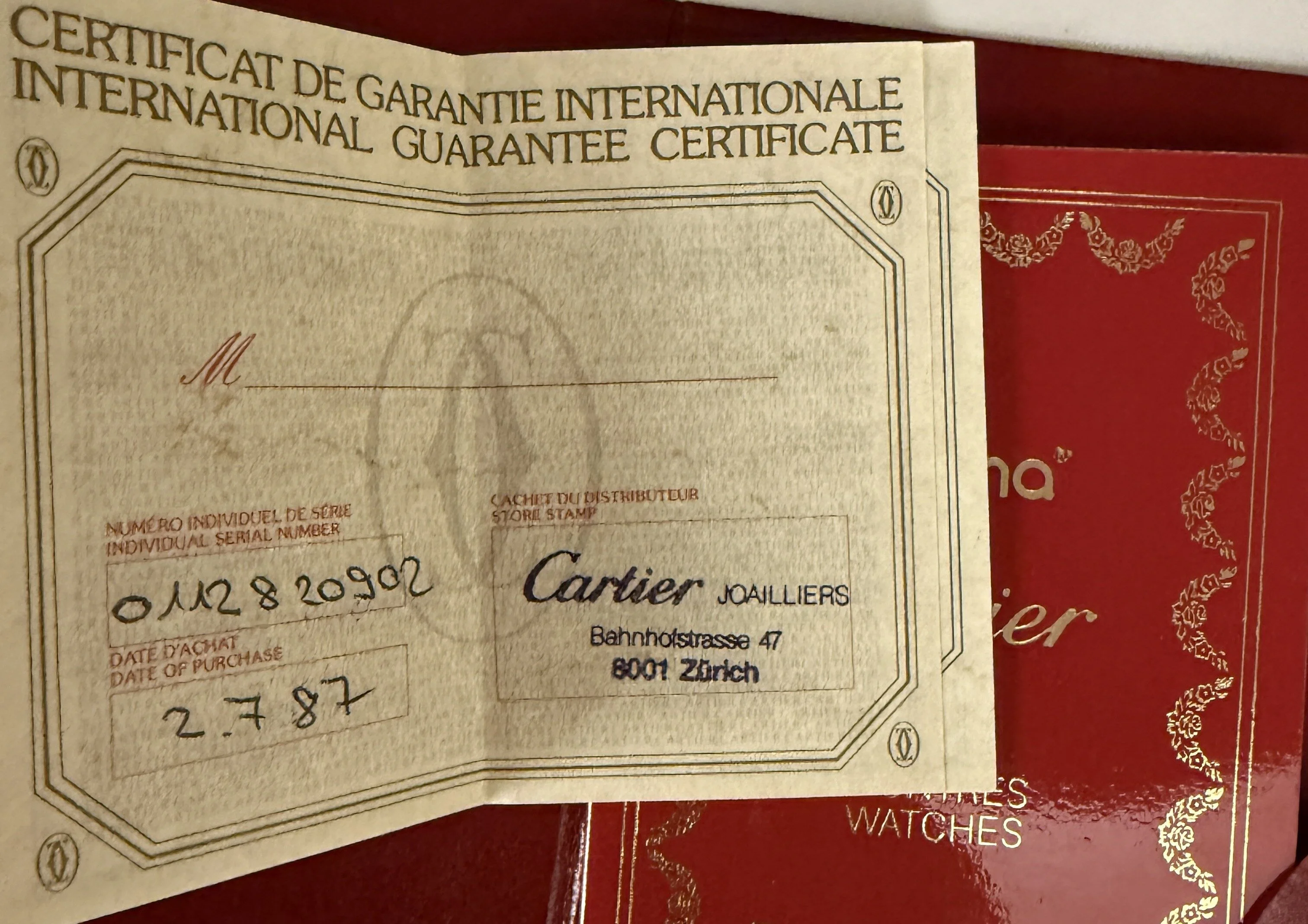
The guarantee certificate names Cartier on Zurich’s Bahnhofstrasse and 2 July 1987. And suddenly my first remark about the eventful life of this watch took on a whole new meaning.
Martin Ohmann Rapp
A square within a circle
The modern Pasha appeared in 1985. Gérald Genta designed it for Cartier: sportier, yet with the elegance of the house. A round case, a square within the dial, the crown cap on its chain.
This example adds the grille. It lies over the crystal like a window onto time – the detail that makes this watch instantly recognisable.
- Removable protective grille in 18K yellow gold over the sapphire crystal.
- The square within the circle: the square minute track.
- Screw-down cap with sapphire cabochon, secured by a short chain.
- At nine o’clock: a nick in the bezel – openly described in the catalogue.
Cartier Pasha de Cartier Grille
- Reference
- 1987
- Dating
- circa 1987
- Proof of purchase
- Guarantee certificate, Cartier Zurich, 2 July 1987
- Case
- 18K yellow gold, 38 mm, removable protective grille
- Bracelet
- Solid link bracelet and folding clasp in 18K yellow gold; wrist size approx. 18.75 cm
- Weight
- 152.2 g with gold bracelet
- Movement
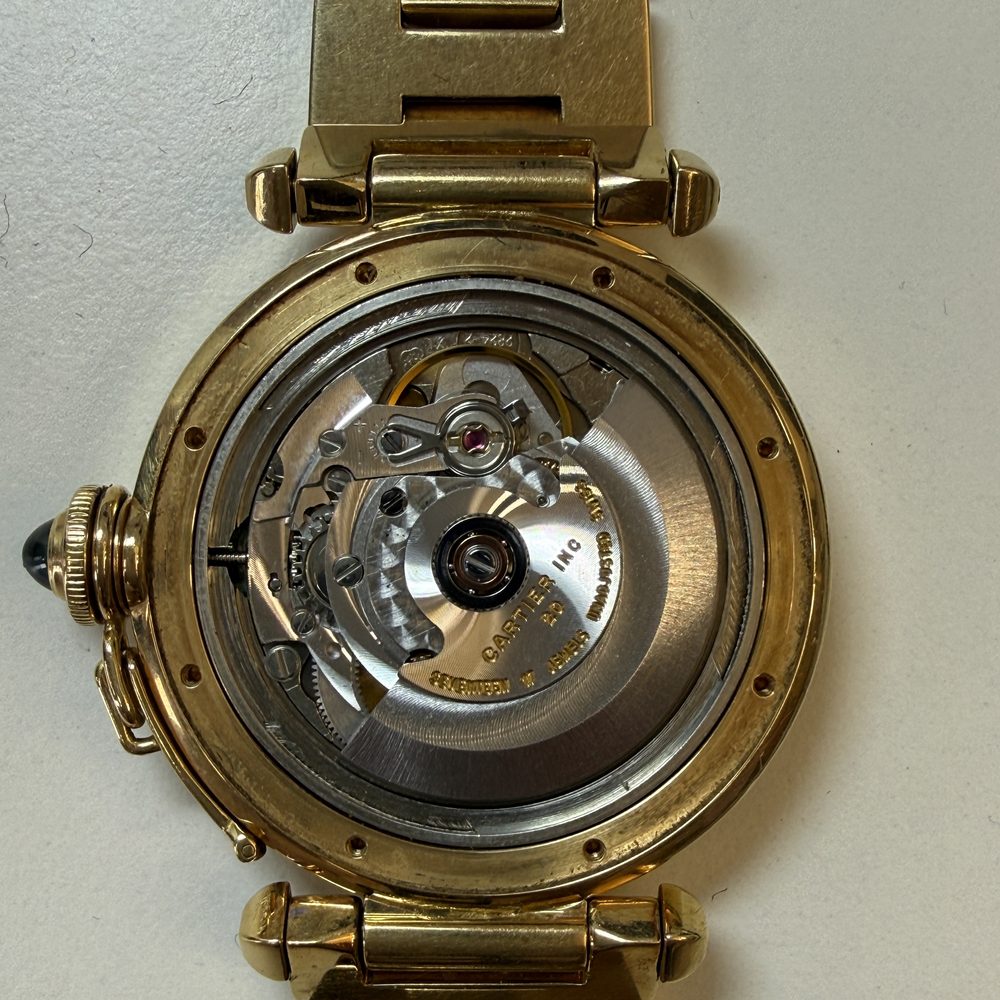
- Automatic, calibre 2824‑2, Cartier rotor; centre seconds, date
- Extras
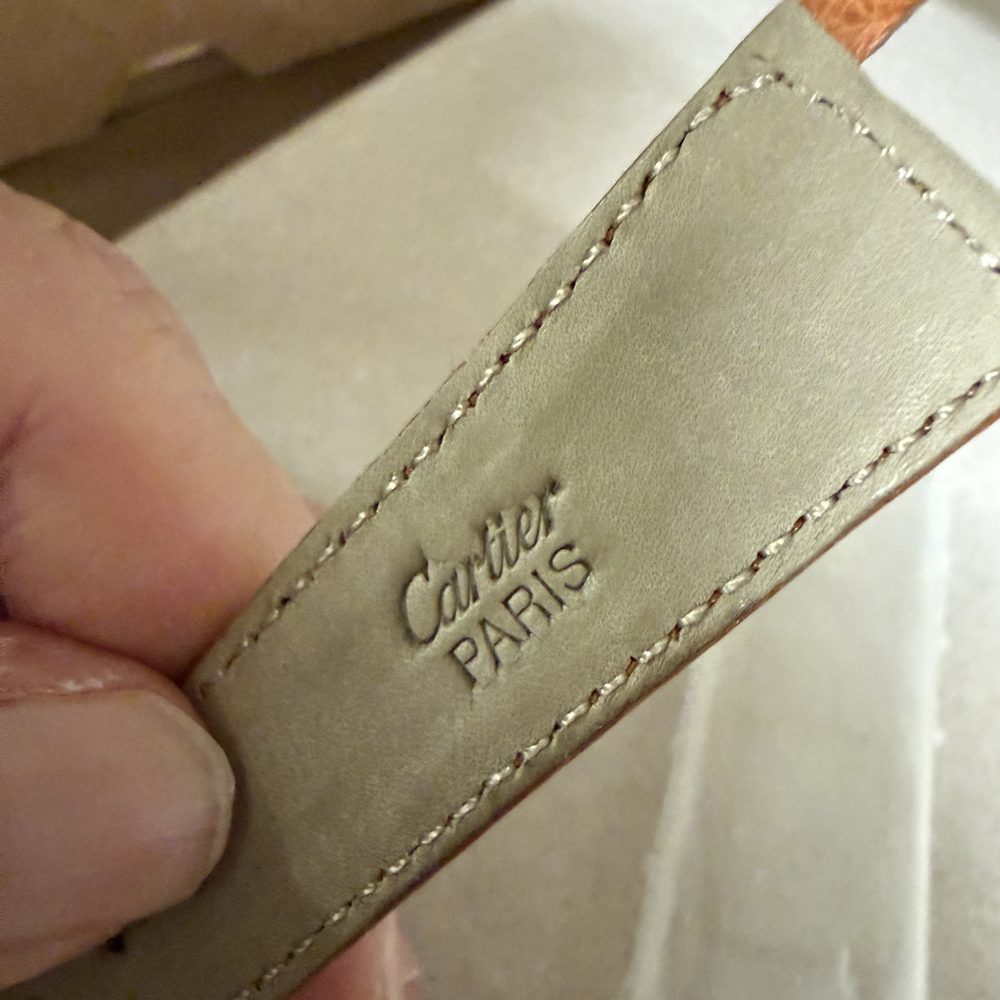
- Brown Cartier leather strap with 18K yellow gold pin buckle, booklet, certificate in red wallet
- Condition
- Light signs of wear, nick in the bezel at nine o’clock; movement in good order according to our watchmaker
- Provenance
- Consigned in person by Georg Herriger and his wife, valuation day in Bern
A new chapter
Today, Georg Herriger and his wife are opening a new chapter – in a new place. The watch that accompanied him for so long is now being passed on. What remains is what it was once given for.
For its next owner, an adventure of their own begins – with a watch that has already seen a thing or two.
“That day in Bern, it was above all the couple across the table who made this Pasha special. Behind the striking grille lay the story of two people – and of a gift that accompanied him for many years.”
Martin Ohmann Rapp · Auktionshaus RappThe cigarettes belonged to the role. The watch belonged to him.
Thursday, 26 November 2026
from 4.00 pm at Auktionshaus Rapp, Wil SG · Rapp Auction 48 · Lot 3126
View the watch catalogue- Swiss Television, DOK “Eine letzte Zigarette – Aufstieg und Fall des blauen Dunstes”, Fritz Muri, 2 April 2009: Play SRF (passage from approx. 13:50, in German) and press release
- Gérald Genta Heritage, Iconic Models: Pasha
- Cartier guarantee certificate, Cartier Joailliers, Bahnhofstrasse 47, Zurich, 2 July 1987 (included with the lot)
- Studies, casting, contract and gift: information from Georg Herriger and his wife, conversation with Martin Ohmann Rapp at the valuation day in Bern and letter of 7 November 2026
Photos of the lot and its inspection: Auktionshaus Rapp · campaign pictures and model card: archive of Georg O. Herriger (model card: photo Guido Flück) · Camel Filters advertisements “Share a new adventure”, USA, from 1985, © R. J. Reynolds Tobacco Company, shown as period documents of the campaign.
Lot Story: choreography and production by Martin Ohmann Rapp · texts by Marianne Rapp Ohmann & expert team · Auktionshaus Rapp